
At first glance, it may seem that cigarette brands differ from each other only in their packaging or capsules—their presence and flavors. However, few people know that there are many different varieties of tobacco. At least six main varieties are widely used in tobacco production worldwide:
- Virginia
- Burley
- Kentucky
- Oriental
- Latakia
- Perique
Each variety of tobacco has its own unique properties: color, flavor, strength, and nicotine content.
Contents
Main Varieties of Tobacco and Their Properties
Which Tobacco Leaves Are Used in Cigarettes
Where Tobacco Grows
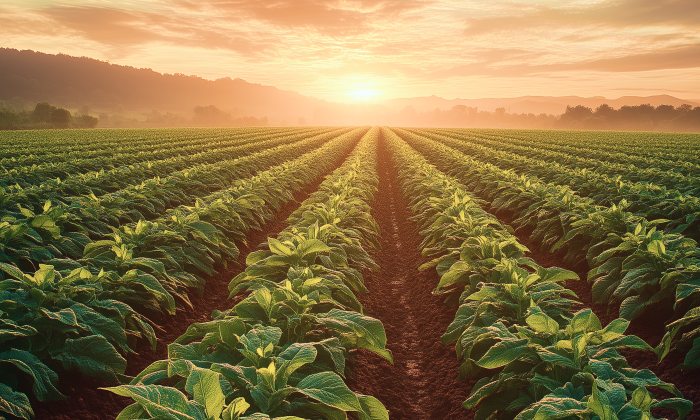
Tobacco is a plant from the nightshade family, and its cultivation depends on very important conditions: soil, climate, and seed quality. Tobacco thrives in warm and hot climates. Farmer experience is equally important, as tobacco can be very demanding in terms of care: proper soil preparation, timely irrigation, pest and disease control, and leaf trimming techniques all impact yield, quality, and flavor.
The largest tobacco plantations are located in Brazil, India, and China, accounting for over 55% of global tobacco production. However, a significant portion of the tobacco grown in China and India is not exported to other countries, but consumed domestically, making Brazil the largest tobacco exporter. For example, in 2021, Brazil’s tobacco export revenue exceeded $1 billion, while Zimbabwe earned $863 million, the United States $802 million, and India and China $630 million and $565 million, respectively.
There are also supplies from Indonesia, Argentina, Zambia, Tanzania, and Pakistan, but their volumes are much smaller, and therefore their share of the global market is insignificant. Tobacco is also grown in Russia, primarily in the south of the country, but it is primarily the finished product, not the raw material, that is exported.
Main Tobacco Varieties and Their Properties
There are approximately one hundred varieties of this plant worldwide, but only a small number are considered smoking tobacco. The following are among the most popular and widespread tobacco varieties:
Virginia
Virginia tobacco is the most famous and popular variety in the world, accounting for 80% of all plantations.
It takes its name from the area where it was first cultivated—the English colony of Virginia, now a separate state.
Virginia tobacco has a high sugar content and a light aroma, which can vary depending on the curing method. For example, open air-curing preserves the natural sweetness, while other processing methods can impart chocolate or fruity notes. Virginia is often smoked neat, but it also forms the base for most tobacco blends. Nicotine levels in this variety range from 1 to 3.5%.
Oriental
Oriental is easily recognized by its distinctive leaf shape, which can be rounded or pointed depending on the growing region. The leaves can reach 20 cm in length, and up to 40 leaves can be harvested from a single plant.
This tobacco variety prefers a dry, hot climate with scorching sun and minimal autumn rainfall, typical of regions in Turkey, Cyprus, and several Balkan countries. For this reason, this tobacco variety is often referred to as “Oriental” or “Turkish.”
Oriental is a rather demanding tobacco variety, and its cultivation requires a special approach: to protect the leaves from the hot sun, they are covered with a special film made from aromatic oils, which prevents them from drying out. In addition to protection, this film imparts subtle notes of musk, incense, and cedar to the tobacco, which can be detected in the sour-sweet flavor.
The low nicotine content (approximately 0.5–1.5%) makes the tobacco unsuitable for smoking on its own, but it is actively used as a flavoring additive, adding complexity to the tobacco blend. Oriental tobacco accounts for approximately 15% of all tobacco grown worldwide.
Burley
Burley tobacco was bred as early as 1864. Currently, it is primarily grown in the Americas and Africa, primarily Zimbabwe and Malawi.
Tobacco leaves have a tubular structure and are relatively small in size compared to Virginia tobacco, making them very receptive to the absorption of flavor additives. Burley contains little of its own natural sugars, but has a high nicotine level, making it the strongest tobacco among those considered in this article.
Burley is most often used in the production of cigars and flavored hookah tobaccos. However, it is also used in pipe blends and added to cigarette blends to enhance strength and richness of flavor.
Curing Tobacco
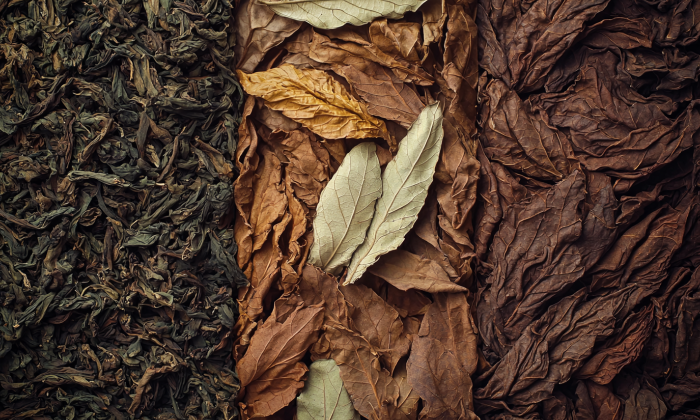
Growing high-quality tobacco is only the first step; after harvesting the leaves, an equally important stage is drying them. Proper drying preserves the aromatic properties and flavor characteristics of the tobacco. The methods of drying and fermenting the tobacco leaves depend on the variety and can greatly influence the flavor and aroma of the final product.
For example, Latakia tobacco is traditionally dried over smoldering logs, which gives it its characteristic smoky aroma.
Kentucky tobacco, used in cigars, is dried over an open fire, which imparts a subtle smoky flavor. Oriental tobaccos are hung in the open sun, which allows the leaves to develop more pronounced sweet notes and a vibrant aroma.
Virginia tobacco is usually dried with hot air or in special roasting tubes, and this drying method affects not only the flavor but also the appearance of the leaves—they become lighter and more golden. There are a number of subtypes of this tobacco variety, each offering interesting blending properties due to its distinct flavor and aroma characteristics:
- Gold – light-colored leaves with a sweet, mild flavor;
- Red – rich leaf color and a deeper flavor with vibrant sweet and spicy notes;
- Matured – a more complex, intense flavor and aroma, with spicy and tart notes;
- Stoved – may have a caramel or slightly smoky flavor.
Burley is naturally cured indoors, which allows for a more balanced flavor and a complex aroma structure that can include spicy, woody, and earthy notes.
Which Tobacco Leaves Are Used in Cigarettes
So, we’ve covered the main tobacco varieties and their curing methods. The question arises: are all tobacco leaves suitable for cigarette production? Yes, but each leaf type has its own role in the tobacco blend.
Unlike tea production, where young leaves and buds are especially prized, leaves from the entire plant are harvested for tobacco blends. The oldest leaves (located closest to the root) provide strength and ensure the cigarette’s combustion, but they lack a distinct flavor. The leaves growing in the center of the plant are responsible for the flavor: they have a balanced taste, combining sweetness with a moderate amount of nicotine. The young, upper growth accumulates the maximum amount of nicotine, giving the tobacco blend its strength and intensity.
Tobacco blend in cigarettes
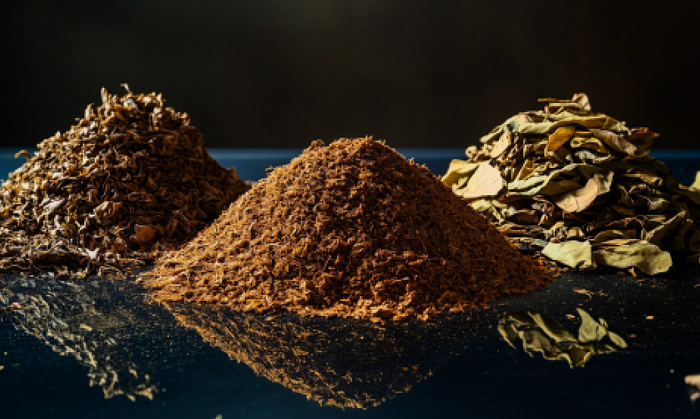
Cigarettes rarely use a single type of tobacco in its pure form. A blend of several components is typically used, most often two or three types of tobacco, and sometimes more. In production, such a mixture is called blend. Tobacco company specialists constantly experiment with the proportions of these components, creating new blends.
One common variation of traditional mecha looks like this:
- 55–62% — Virginia
- 22–38% — Burley
- 8–16% — Oriental
But it’s important to understand that even minor changes in proportions, such as fractions of a percent, can significantly impact the flavor and strength of the final product.
This article discussed the different types of tobacco, their differences, where they are grown, how they are cured, and the proportions in which they can be added to the final product.