
When a brand gains popularity, there inevitably appear those who try to counterfeit it and profit from the image of an already established, high-quality brand. Consider the replicas of brand-name clothing and accessories that are easily found at flea markets. The same thing happens in the tobacco industry. However, distinguishing a counterfeit from an original can be much more difficult.
Contents
The Problem of Counterfeiting in the Market
- Spelling Errors
- Emblem
- Barcode
- QR-code
- Packet Color
- Spilled Tobacco in the Pack
- Excise stamp
- Tobacco Health Warning
What are the Dangers of Counterfeit Cigarettes?
The Problem of Counterfeiting in the Market
First, let’s clarify the terminology. Counterfeit cigarettes are products that violate national laws and intellectual property rights. Since counterfeit cigarette production cannot be officially or legally produced, the “manufacturer” does not pay taxes on such products, which entails economic losses for the state.
The problem of counterfeiting in the tobacco industry is enormous: 6 to 12% of all tobacco products worldwide are illegal, amounting to approximately 330-660 billion cigarettes per year.
Illegal products come in many forms.
1. What types of illegal products can we find on the tobacco market?
Imitation Brands
These are cigarettes whose packs closely resemble the original: the packaging design is similar to that of a well-known brand, and the name is also very close, yet still different from the original. Such products may even have their own registered trademark, but an inattentive buyer can easily confuse them with the genuine brand.
Complete Counterfeits or Replicas
In such cases, cigarettes of the original brand are completely copied: not only the name and packaging design, but also the flavor characteristics are attempted to be identical. A significantly lower price can give away a counterfeit. If the price of cigarettes is 20-30% lower than the market price, this is cause for concern.
Failed Quality Checks
This category includes products that failed quality checks at the factory and should have been disposed of, but instead were illegally sold in stores.
It’s important to understand that counterfeit products can pose a health hazard.
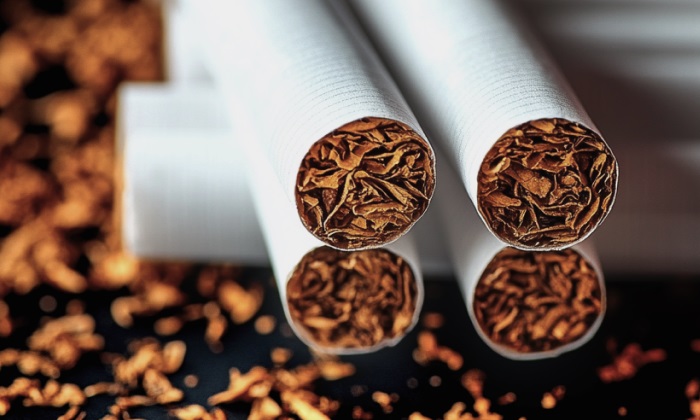
How can you distinguish genuine, original cigarettes from counterfeit ones? There are several signs to look for when purchasing tobacco products.
- Spelling Errors. Unscrupulous manufacturers often rush through the process and make spelling errors, such as in the flavor description or the name “bags.” Such information may even be absent altogether.
- Emblem. Pay attention to quality marks such as a logo, coat of arms, or brand emblem. Counterfeit cigarettes may reproduce these inaccurately—they may differ in color, size, or be positioned asymmetrically.
- Barcode. The barcode must be clearly and accurately printed and include the country code of manufacture. For example, Swiss cigarettes begin with 762, British cigarettes with 50, and Russian cigarettes with 460–469.
- QR-code. Many brands place a QR code inside the pack that links to the company’s official website. If, after scanning it, you are redirected to a third-party resource or receive an “error” message, this may indicate that the product is counterfeit or illegal.
- Packet color. Despite the great efforts of counterfeit manufacturers, counterfeits can be distinguished from the original by the color and quality of the ink application on the packaging: the color should be uniform and consistent, and most importantly, for legal cigarettes, it will be the same for all batches produced. Counterfeit products, however, may have different colors—and if the original and counterfeit are placed side by side, the difference in shades will be noticeable. This also applies to matte and glossy packaging elements.
- Spilled tobacco in the pack. Underground production facilities often fail to adhere to production standards, resulting in poorly packaged tobacco. An open pack may contain tobacco shavings, and in low-quality counterfeits, they may even be present in a sealed pack under protective film.
- Excise stamp. Every cigarette pack must have an excise stamp. Currently, paper excise stamps are found on packs, but they will soon be replaced by a “digital excise stamp.” Cigarettes without an excise stamp or bearing the designation of another country are considered contraband and, therefore, illegal.
- Tobacco Health Warning. By law, cigarette packaging must display a warning on the front and back of the packaging, covering at least 50% of the packaging surface. This warning contains information about the detrimental health consequences of tobacco consumption and tobacco smoke, displayed on the consumer packaging of tobacco products in the form of color images or photographs, including text. The list of such warnings is also regulated by law; manufacturers cannot alter these images in any way.

What is the danger of counterfeit cigarettes?
The first thing to note is that counterfeit cigarettes do not undergo any testing to ensure compliance with standards. Therefore, at best, they will simply contain the lowest-quality tobacco. However, it is impossible to be sure that such cigarettes are free of any unwanted substances, such as debris, metal shavings, or even insects, which could have potentially entered the pack or cigarette during production. The main danger is that it’s impossible to know how many harmful substances are contained in specific illegal cigarettes, as their composition is not regulated. This can pose a serious health risk.
It is recommended to check cigarettes for authenticity, especially if they are purchased from small tobacco shops rather than large retail chains.