
Currently, approximately 70 to 100 varieties of tobacco are grown worldwide. Among the most common are Virginia, Burley, Kentucky, Oriental, Latakia, and Perique. In our article on Tobacco Varieties, we already discussed the most common varieties, and in this one, we’ll focus on Virginia—its characteristics, history, and growing geography.
Contents
What is Virginia Tobacco
Origin of Virginia Tobacco
Why is this variety valuable today?
What is Virginia Tobacco
Virginia is one of the most famous and widespread varieties in the world. Its history spans several centuries, and its popularity is due to its unique characteristics: a variable aroma, high sugar content, and versatility in production. This variety is the basis for the “American Blend” popular in Russia (the percentage of this blend varies from manufacturer to manufacturer, but can reach 60-70%).
Virginia tobacco is classified as a light tobacco (leaf color ranges from light yellow to golden (after drying)), and has a moderately rich and mild flavor with light fruity notes in the aroma.
These characteristics make it particularly suitable for use in aromatic and capsule cigarettes. This variety is also valued by manufacturers for its ease of cultivation and adaptability to various climatic conditions.

Origin of Virginia Tobacco
The history of this variety presumably began long before the advent of the tobacco industry. Archaeological finds indicate that similar plants were cultivated by Native American tribes over 3,000 years ago. Much later, tobacco leaves and seeds were brought to the Old World by members of Columbus’s expedition, and Virginia spread throughout Europe.
The true development of Virginia is traditionally associated with the name of John Rolfe, an English settler in the North American colony of Virginia. In the 12th century, Rolfe essentially bred a new variety of tobacco, adapting its South American predecessor. to the soil and climate of these areas. Rolf began commercial cultivation of tobacco in Jamestown, the first English settlement in what is now the United States.
Tobacco growing became the economic basis of the colony, with leaves exported to England.
Tobacco owes its name to the colony where it was first actively cultivated. Over time, it quickly spread due to its mild aroma and ease of processing.

Where it is grown
Today, Virginia tobacco is grown in many countries around the world. The most favorable conditions for its cultivation are warm climates and fertile soils. The modern geography of cultivation of this variety spans four continents.
Asia — China and India are the world’s leading producers of tobacco in general and, presumably, Virginia in particular, as one of the most common varieties. However, it is important to note that a significant portion of tobacco from these regions is destined for the domestic market.
South America — Brazil is the third largest tobacco producer in the world and also grows Virginia in large volumes. Brazil — A major exporter.
North America — In the United States, the variety’s native land, tobacco has long ceased to be a major agricultural crop, but is still actively produced, particularly in the state of Virginia.
Africa — The continent’s largest producers are Zimbabwe, Mozambique, and Malawi.
Each region imparts its own distinctive flavor and aroma to the tobacco, depending on the soil and climate.
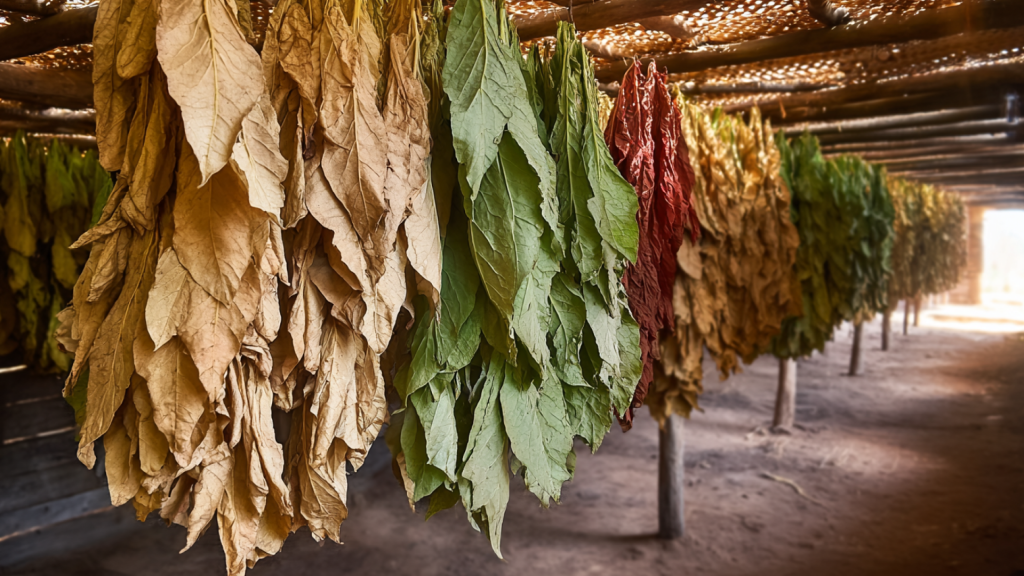
Varieties of Virginia Tobacco
Currently, several varieties of Virginia tobacco are grown worldwide, each with its own distinct characteristics. The main subvarieties include Bright Virginia, Golden, and Red. They differ in aroma, nicotine content, and sugar content.
- Bright Virginia — distinguished by its bright yellow leaves and high sweetness with a relatively low nicotine content.
- Dark Virginia — has the most intense flavor and leaf color, undergoes longer processing (the leaves darken after fermentation), and has a deep An aroma with notes of caramel and wood, and a medium nicotine content; used in pipe blends.
- Gold Virginia – a cross between Light and Red Virginia, characterized by sweet notes of caramel and nuts, and a medium nicotine level.
Each variety undergoes a special processing method, including sun-drying or air-fermentation.
Why is this variety valuable today?
In the modern tobacco industry, Virginia remains in demand and widely used due to its unique characteristics.
Key Features:
- Technology: The plant is ideal for machine processing.
- Compatibility: It has a mild aroma and pairs well with other varieties and with capsules/flavorings in cigarettes.
- Stability: Crushed leaves retain their properties during long-term storage.
Main Applications:
- Cigarette Production
- Pipe Blends
- Hookah Tobacco
- It is also used as a raw material for the production of shag, smoking blends, and other tobacco products.
Conclusion
Virginia tobacco has a rich history that began several hundred years ago and continues to this day. Its sweet aroma, versatility, and ease of cultivation have made it one of the most widely used tobaccos in the world. Today, it remains an important part of the tobacco industry, adapting to modern consumer demands and preferences.