
All cigarettes contain tobacco, but some consumers feel that their aroma is radically different—this is due to a unique recipe called a blended tobacco. The product is created by combining different raw materials, which determines the aroma and richness of the tobacco.
Contents
Main blended tobacco varieties
How blended tobacco is created
What is blended tobacco?
It is a combination of several types of tobacco processed using a special technology. Even the same variety, grown in different regions, produces different notes. For example, American Virginia tobacco differs from Brazilian tobacco. Manufacturers experiment with proportions, so identical products are rare, resulting in each tobacco aroma being unique.
A tobacco blend is the basis for any smoking product, and a cigarette with a specific composition has a balanced aroma.
Main blended tobacco varieties
- Virginia. The most common tobacco with a light shade. It is high in sugar. Grown in the USA, Argentina, and China. The tobacco is hot-air-dried, which produces a mild* aroma with a slight sweetness. Virginia is used in most tobacco blends.
- Burley. American tobacco is unsweetened and full-bodied. American leaves are shade-dried for two months, which imparts a richness reminiscent of cigars. Burley is used when a more intense tobacco aroma is desired.
- Oriental. Grown in Turkey, Greece, and other Balkan countries. The leaves of this variety are coated with a film of aromatic oils that prevents drying. This gives the cigarette a tart and spicy aroma. It typically makes up 5-10% of a tobacco blend.
Popular types of tobacco blends:
- Virginia. The base is the Virginia variety. Sometimes 3-5% Burley or Oriental is added for depth of flavor. Flavorings are not used in such blends.
- American Blend. Burley tobacco blend is popular in the US. It combines all three varieties: approximately 70% Virginia, 20% Burley, and 10% Oriental. To enhance the aroma, American blend producers add sauces and flavorings.
How blended tobacco is created
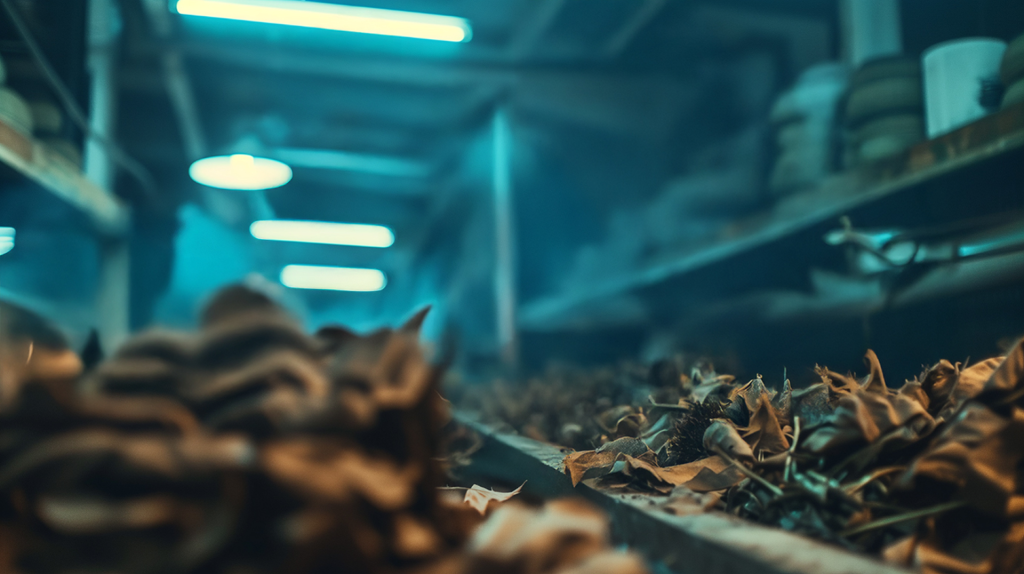
- The raw materials are analyzed. Producers consider where the tobacco was grown, the climate, and the curing method used.
- The plants are chopped coarsely. The leaves are cut into equal-sized pieces.
- The leaves are prepared. The tobacco is moistened to maintain its shape and treated with sauces to even out its flavor.
- The excess is removed and the desired flavor is added. For example, Burley is heated in a special toaster to impart a specific flavor.
- Mixing. The cigarette tobacco components are combined in a blender for 2-3 hours to ensure the sauce fully permeates each leaf.
- The mixture is finely chopped. The resulting mass is cut into strips 0.5-0.9 millimeters long.
- Drying. The almost-finished chopped leaves are stripped of excess moisture.
- Aroma is restored. When blends are made, some of the aroma is lost; this is restored with flavorings.
- Allowed to rest. The cigarette filler is stored in accumulators to stabilize the aroma.
Previously, tobacco was sold loose, and smokers used it in pipes or rolled homemade tobacco products (so-called “roll-your-owns”). With the advent of factory-made cigarettes in stores, everything changed: consumers receive ready-made products that don’t require time-consuming rolling.